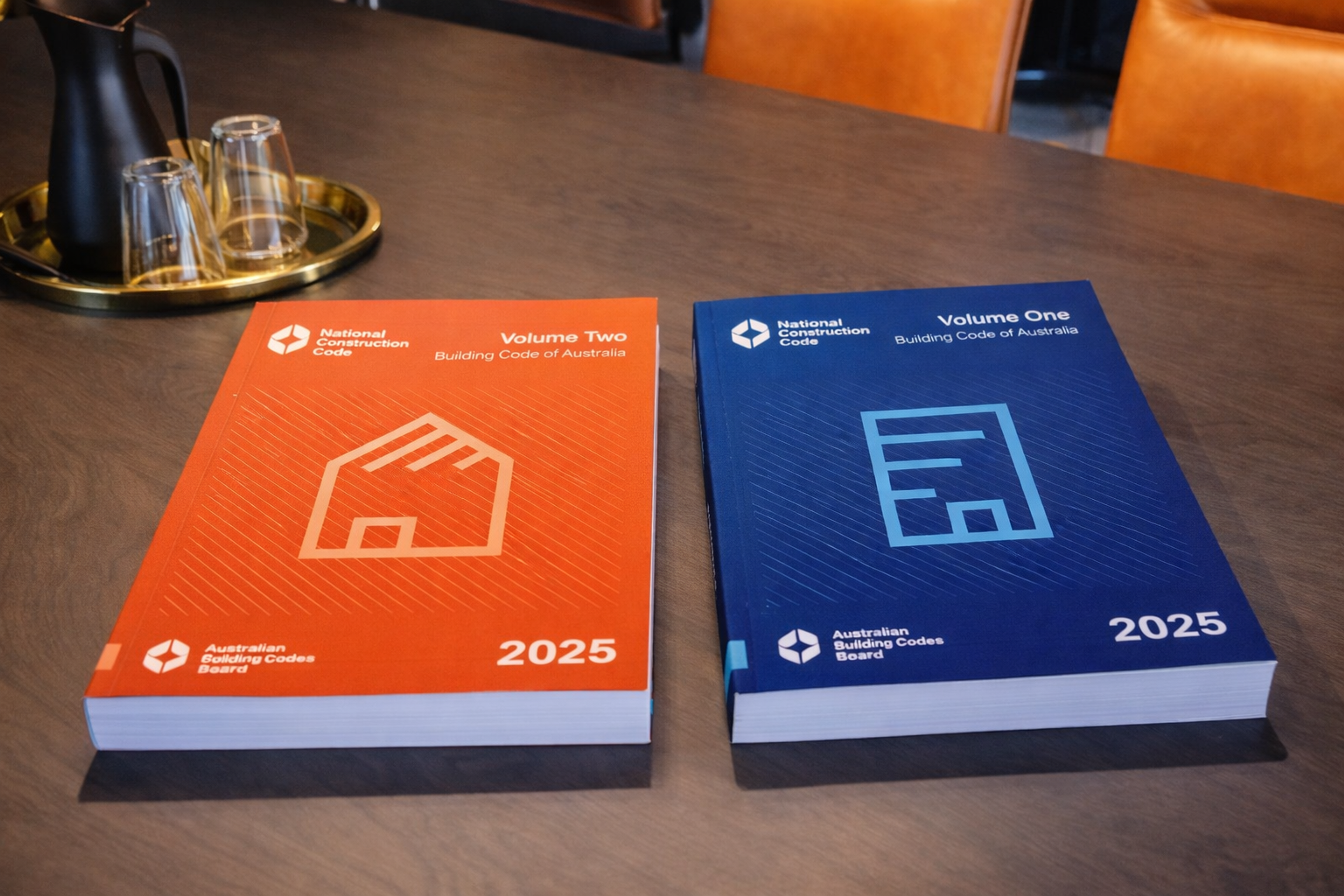
NCC 2025 preview now available
The Australian Building Codes Board has released the preview of NCC 2025, providing industry with early visibility of the next edition of the National Construction Code.
States and territories may consider adoption of NCC 2025 from 1 May 2026, however individual adoption dates and transition arrangements remain subject to confirmation by each state or territory.
At this stage, the preview should be understood as forward guidance rather than an immediately enforceable requirement.
What changed and why
NCC updates typically follow a three-year cycle, however recent editions have seen adjusted implementation timing as governments balance regulatory reform with industry capacity and broader construction sector pressures.
NCC 2025 is positioned as a targeted refinement rather than a wholesale rewrite. The focus is on improving clarity and performance outcomes in key areas of building design, construction and operation, while maintaining the performance-based structure of the Code.
Key themes emerging from the preview
While detailed technical review is ongoing, several focus areas have been flagged:
- Strengthening water management provisions in higher-density and complex buildings
- Fire safety considerations in enclosed and structured carparks
- Continued refinement of condensation and moisture management
- Updates influencing commercial energy efficiency pathways
These changes build on the direction established in NCC 2022, continuing the emphasis on durability, safety and long-term building performance.
Adoption will occur by each state or territory
Importantly, the release of NCC 2025 does not mean it applies immediately.
The NCC only becomes enforceable once adopted by each state or territory through their respective legislative instruments. Adoption timing can vary across Australia and may include local variations, staged implementation or defined transition periods.
While 1 May 2026 has been identified nationally as the earliest potential adoption window, individual states, including Victoria, are yet to formally confirm their commencement dates or any associated variations.
For national project teams, this means transition timing remains fluid and location specific.
Section 10 of the Building Act and transitional choice (VIC)
As seen during the transition to NCC 2022, transitional mechanisms can play an important role where substantial design work has already commenced prior to adoption of a new NCC edition.
In Victoria, Section 10 of the Building Act provides a framework that may allow the Relevant Building Surveyor to assess a project against the earlier NCC edition where substantial design development can be demonstrated before the new Code takes effect.
A similar practical approach will be relevant where projects are well advanced prior to NCC 2025 adoption.
Project teams should therefore consider:
- Clearly documenting design milestones
- Identifying projects likely to span the transition period
- Engaging early with the Relevant Building Surveyor to confirm the applicable Code edition
- Monitoring announcements from the relevant state or territory regulator
This approach can reduce approval risk and avoid unnecessary redesign where projects are already materially progressed.
What this means for current and future projects
At preview stage, NCC 2025 is not yet mandatory in any state or territory.
However, early visibility allows project teams to:
- Anticipate emerging compliance settings
- Review standard specifications and performance pathways
- Manage approval risk for projects programmed beyond the anticipated transition period
- Prepare internal systems and documentation templates in advance
As always, the key risk during Code transitions is not the publication date, but the interaction between project timing and legislative commencement.
Looking ahead
Further clarity will emerge as each state and territory confirms its adoption date, transition arrangements and any local variations.
Until then, practitioners should continue to apply the currently adopted NCC applicable to their project location, while reviewing NCC 2025 to understand its likely future impact.
How we help
Krneta continues to monitor NCC 2025 developments nationally and can assist project teams in navigating transition timing, Code applicability and compliance strategy as adoption dates are confirmed across Australia.